
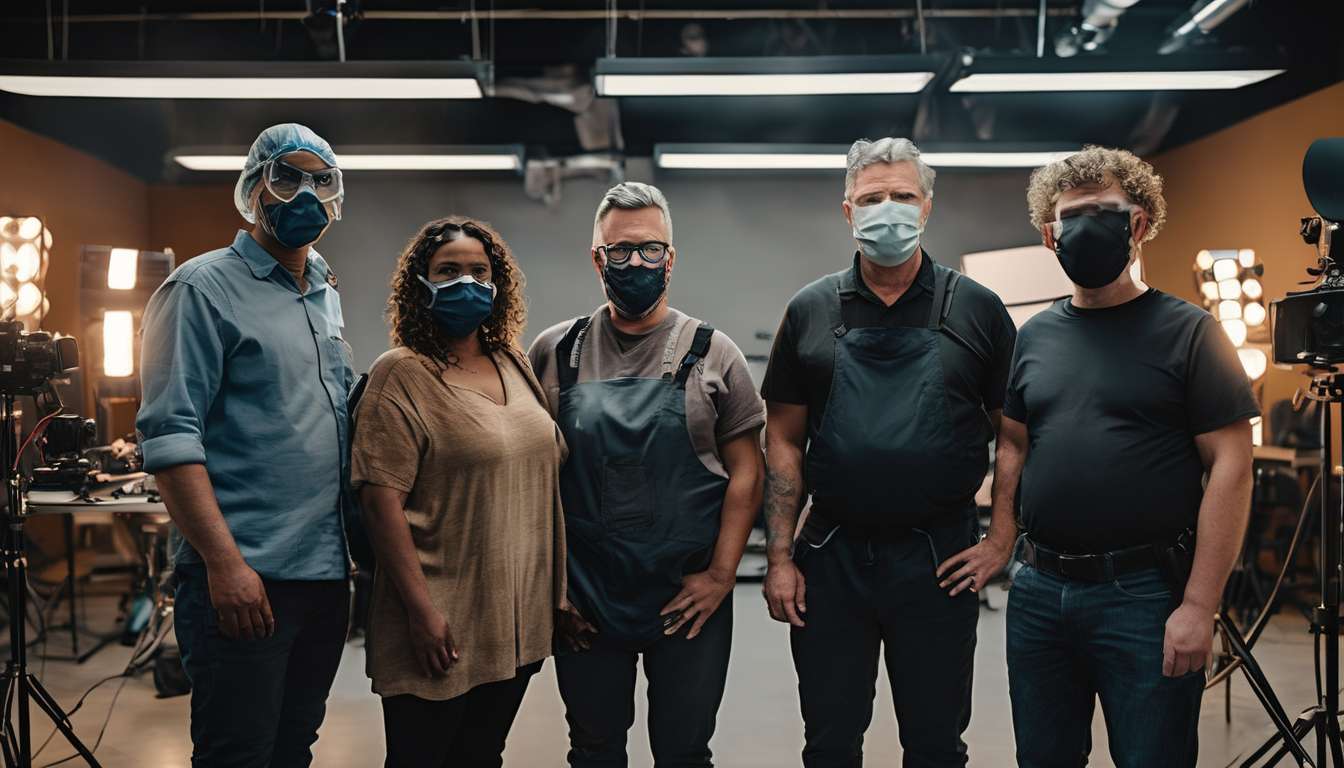
Beneath the spotlight, "safety" can sound like a vague promise rather than an enforceable right.
We gather to examine workplace protections across adult image production roles because too many policies treat performers, technicians, and creators as interchangeable components instead of people with distinct needs.
We argue that consent, testing protocols, insurance, and labor representation deserve the same rigor afforded other media industries.
We acknowledge power imbalances that leave some workers vulnerable to coercion, inconsistent recordkeeping, and financial precarity.
We also recognize the diversity of roles and the ways protections must be tailored to each:
- On-camera performers
- Camera operators
- Makeup artists
- Producers
Drawing on interviews, legal frameworks, and occupational-health research, we map gaps and practical remedies.
Our goal is not moralizing but offering concrete steps to strengthen safety, privacy, and economic fairness while respecting autonomy and creative freedom.
Together, we aim to move the conversation from ad hoc accommodations to accountable standards that protect everyone involved.
Consent and Boundaries
We prioritize clear, ongoing consent and well-defined boundaries to protect performers’ safety, autonomy, and dignity.
We create consent protocols that are explicit, revisitable, and documented.
- These protocols spell out what’s allowed, what’s off-limits, and how anyone can stop activity at any time.
- Consent is treated as continuous — reversible, specific, and informed.
- All consent decisions are recorded so expectations are shared and enforceable.
We commit to on-set safety by briefing crew and performers before rolling.
- Briefings cover agreed limits, safety words, and emergency procedures.
- Everyone on set is informed of their responsibilities to respect boundaries.
- Pre-scene check-ins and debriefs are standard practice.
We foster an environment where asking for clarification or pausing isn’t judged.
- Psychological safety and mutual respect are essential to belonging.
- Performers and crew are encouraged to speak up without fear of stigma or retaliation.
We uphold privacy protections and control distribution of content.
- Identifying information is shared only on a need-to-know basis.
- Role-based access controls and secure data practices limit who can view or distribute material.
- Consented release forms determine how a performer’s work and image may be used.
We regularly review and update protocols with performer input.
- Reviews incorporate lived experience and feedback to build trust.
- Policies are revised as needed to reflect changes in practice, technology, or law.
We keep communication direct, incident reporting straightforward, and accountability clear.
- Reporting channels are simple, accessible, and protect confidentiality.
- Investigation and remediation procedures are transparent.
- Clear accountability ensures everyone feels supported and confident in the boundaries that safeguard our shared work.
Health Screening Protocols
We require regular, evidence-based health screenings and transparent reporting procedures to protect performers and crew while minimizing disruption to production.
- We schedule routine testing, vaccination updates, and symptom checks that follow public health guidance and respect individual circumstances.
- We pair these measures with clear consent protocols so everyone knows what tests are required, how results are used, and how refusal or medical exemptions are handled without stigma.
We commit to on-set safety by ensuring rapid access to medical care, confidential channels for reporting concerns, and designated health liaisons who coordinate logistics.
- We balance operational needs with privacy protections:
- Encryption: Test results are encrypted and shared only on a need-to-know basis.
- Retention: Records are retained for the minimum time required.
- We involve team members in shaping protocols, offer training on procedures, and review our approach regularly so it stays current, equitable, and rooted in mutual respect.
On-Set Safety Standards
We establish clear, enforceable on-set procedures that keep performers and crew safe, ensure hazards are mitigated, and make responsibilities and escalation steps unmistakable.
We implement consent protocols before any scene, confirming boundaries, safe words, and documented agreements so everyone feels respected and included.
We hold pre-shoot briefings to review choreography, props, and timing, reducing surprises and reinforcing on-set safety expectations.
We designate trained safety officers and accessible first-aid resources, and we make reporting channels immediate and nonpunitive so concerns are addressed without fear.
We rotate duties to prevent fatigue and require breaks to protect physical and mental wellbeing.
We train crew in de-escalation and incident response, ensuring roles are clear if situations arise.
We balance transparency with discretion, upholding privacy protections in communications and access control while fostering a community where members trust each other.
We audit practices regularly, welcome feedback from performers and crew, and adapt standards collaboratively to maintain a safe, supportive workplace.
Privacy and Data Protections
We protect performers’ and crew members’ personal and production data through strict access controls, encryption, and clear retention policies.
-
Access controls and authentication
- We limit who can access files and log every access.
- We require multi-factor authentication so everyone knows data is handled responsibly.
-
Encryption and secure storage
- Recorded releases and consent documents are tied to securely stored, time-stamped documentation so consent is verifiable and portable across platforms.
- Backups are encrypted and purged according to schedule to balance archival needs with individual privacy protections.
We minimize identifiable data and manage retention to reduce risk.
-
Anonymization and minimization
- We anonymize metadata when footage isn’t in use.
- Teams are trained on record minimization to collect and retain only what’s necessary.
-
Retention and purge
- We purge backups according to schedule while respecting archival and legal requirements.
We train teams and communicate clearly to build a culture of safety and inclusion.
-
Training
- We train teams on incident response and privacy best practices so people feel included in protecting each other.
-
Plain-language communication
- Data-handling information is provided in plain language and available before shoots, reinforcing on-set safety and mutual respect.
We respond transparently to breaches and disputes.
- Investigate incidents transparently.
- Notify affected individuals promptly.
- Remediate issues and update practices to prevent recurrence.
By embedding these practices, we create a community where people trust that their identities, choices, and materials are safeguarded, supporting dignity and collaboration in every production role.
Fair Pay and Contracts
We ensure performers and crew receive transparent, timely compensation and clear, enforceable contracts that reflect the scope of work and protect their rights.
We craft agreements that spell out:
- Rates — agreed fees for services.
- Payment schedules — when and how payments will be made.
- Deliverables — what is expected, and in what format.
- Reuse and licensing terms — how work may be used now and in the future.
- Cancellation policies — consequences and remedies if plans change.
- Dispute resolution — agreed processes for resolving conflicts.
We prioritize clauses that reinforce consent protocols, on-set safety, and privacy protections, making those obligations contractually binding rather than optional practices.
We include mechanisms for scope changes and ensure prompt, itemized payment:
- Renegotiation mechanisms when scope or deliverables change.
- Itemized invoices to show exactly what is being charged.
- Prompt payment windows to prevent exploitation.
We make contracts accessible and support review:
- Right to counsel — talents can review contracts with trusted advisors.
- Plain language — avoid legalese that isolates newcomers.
We commit to transparent crediting, recordkeeping, and fair grievance processes:
- Transparent crediting so contributions are acknowledged.
- Accurate recordkeeping so work and payments are traceable.
- Confidential reporting for grievances.
- Neutral mediation before escalation to formal disputes.
By centering fair pay and clear contracts, we build a community where people belong, feel respected, and can work without fear that their rights or safety will be sidelined.
Insurance and Worker Benefits
We provide comprehensive insurance and benefits that cover health, liability, and paid leave so performers and crew are protected during work, injury, or unexpected downtime.
We prioritize policies adapted to our industry’s realities, offering options such as:
- Short-term disability
- Mental health support
- Incident-related care
We link benefits to consent protocols and safety standards so coverage aligns with the actual environments people work in.
We build inclusive, plain-language enrollment processes so everyone feels they belong and can make informed choices.
We negotiate collective plans to lower costs and expand access while maintaining privacy protections in administration to prevent unwanted exposure.
We provide education and administrative support, including:
- How to use benefits
- How to document incidents for claims
- How to transition coverage between projects
By centering practical support, shared responsibility, and confidentiality, we ensure the people who create work here have reliable safety nets that respect their dignity and professional needs.
Reporting and Accountability
Clear, accessible reporting channels and transparent accountability measures will be established so incidents are documented, investigated, and resolved fairly.
Multiple reporting options will be provided so everyone feels safe coming forward:
- Anonymous forms.
- Designated advocates.
- A trusted escalation path.
Reports will be tied to documented context to make them actionable:
- Link reports to consent protocols.
- Link reports to on-set safety records.
Investigations will be prompt and impartial with defined timelines and regular updates:
- Maintain confidentiality and privacy protections at every step.
Graduated, consistent consequences will be applied for policy violations, and aggregate outcomes will be published:
- Preserve individual privacy while showing that accountability matters.
Support for reporters and respondents will be provided throughout the process:
- Medical resources.
- Legal resources.
- Counseling resources.
- Protections for employment rights during inquiries.
Continuous improvement and community input will guide policy updates:
- Review trends from reports to improve policies and on-set safety practices.
- Invite community feedback so systems remain responsive.
Our cultural goal: ensure reporting is respected, fairness is visible, and accountability builds trust.
Training and Professional Development
Mandatory, role-specific training and ongoing professional development
We’ll provide mandatory, role-specific training and ongoing professional development so performers and crew have the skills, knowledge, and support to work safely, respectfully, and confidently.
Key elements before engagement:
- We’ll ensure every team member completes clear modules on consent protocols, boundaries, and communication techniques before any engagement.
- Practical workshops will rehearse:
- negotiation,
- verbal check-ins,
- de-escalation,so that consent is active and revocable in real time.
On-set safety as a shared competency
We’ll make on-set safety a shared competency: emergency response, safe positioning, and hazard recognition will be practiced regularly.
- Trainers will include experienced peers to foster trust and belonging.
- We’ll offer mentorship pathways so newcomers can learn from those with lived experience.
Privacy and data-protection training
We’ll equally prioritize privacy protections training: handling personal data, secure media storage, and respectful off-set conduct are standards everyone must meet.
Assessment, feedback, and access
- Assessments and refresher courses will be scheduled.
- Feedback will shape curriculum.
- Accommodations will be available to ensure access.
Together, we’ll build a competent, accountable community where safety, dignity, and growth are central.
How do workplace protections differ for independent performers who produce and distribute their own content versus those working for studios or agencies?
Independent creators have more control over scheduling, content, and distribution, which means they must handle safety, testing, contracting, and insurance themselves and rely on peer networks for support.
This autonomy gives flexibility but shifts responsibility — you need to put systems in place for health protocols, negotiate clear terms, and arrange your own coverage rather than depending on an employer or production company.
Studio or agency performers benefit from institutional protections, including on-set safety protocols, pooled testing, HR channels for reporting concerns, and standardized contracts.
Those institutional protections often come at the cost of creative control, since companies typically set policy, schedules, and distribution terms.
You’re better protected when you use clear agreements and community resources.
- Practical steps to improve protection:
- Draft written agreements that specify safety protocols, payment terms, cancellation policies, and ownership/usage rights.
- Maintain or purchase appropriate insurance (health, liability, equipment).
- Establish and follow testing and on-set safety plans for shoots — even small, independent ones.
- Build and use peer networks or unions/coalitions for shared resources, pooled testing, legal support, and dispute resolution.
Bottom line: Independents gain flexibility and control but must proactively create and fund their own protections, while studio/agency performers trade some autonomy for institutional safety nets.
What protections and accommodations exist for performers with disabilities or chronic health conditions beyond standard on-set measures?
Overview — purpose and scope
We’re asking what extra protections and accommodations exist for performers with disabilities or chronic conditions beyond standard on-set measures.
Key categories of accommodations and protections
Accessible sets and workspaces
- Physical access: ramps, wide doorways, accessible restrooms and dressing rooms, safe floor surfaces.
- Environmental controls: adjustable lighting, reduced-noise zones, scent-free policies, temperature control.
- Quiet/low-stimulation rooms for rest or medical needs.
Flexible scheduling and work arrangements
- Flexible call times and staggered starts.
- Reduced or modified hours, part-time or shortened shooting days.
- Remote or hybrid shooting options (pre-recorded lines, green-screen, motion-capture, ADR).
- Advance notice of schedule changes and predictable scheduling blocks.
Assistive devices and personal care
- Allowance and space for assistive devices (wheelchairs, mobility aids, hearing devices, communication aids).
- Provision for personal care attendants, interpreters, or caregivers on set.
- Charging and storage stations for medical equipment.
Contractual protections and confidentiality
- Clear disclosure of accommodations in contracts with confidentiality protections for health information.
- Express anti-discrimination clauses and contractual remedies for breaches.
- Guaranteed paid breaks and reasonable rest periods written into agreements.
- Clauses for schedule flexibility, last-minute adjustments, and protections against retaliation.
Safety, modified performance, and trained staff
- Modified choreography, blocking, stunts, or camera setups to reduce risk.
- Risk assessments and individualized safety plans for stunts or demanding scenes.
- On-set staff trained in disability awareness, communication (e.g., ASL basics), and use of assistive equipment.
- Medical personnel and emergency plans familiar with specific conditions.
Pay, benefits, and leave
- Paid break policies, sick leave, and short-term disability provisions for flare-ups.
- Access to medical leave or temporary reassignment without penalty.
- Compensation for additional time needed to perform with accommodations.
Support, resources, and advocacy
- Peer support networks and mentorship programs for performers with disabilities.
- Access to legal resources and unions that enforce accommodation standards.
- Advocacy for inclusive hiring practices, diversity riders, and industry-wide policies.
Implementation and best practices
- Engage the performer and relevant medical or occupational specialists to create individualized accommodation plans.
- Include accommodations in the production budget and scheduling from pre-production onward.
- Provide advance notice and written summaries of accommodation arrangements to relevant crew.
- Train crew and leads before production begins; conduct run-throughs of modified staging or emergency procedures.
- Monitor and adjust accommodations during production with a confidential feedback channel.
Principles to insist on
- Respect for autonomy and confidentiality.
- Collaborative, individualized planning rather than one-size-fits-all solutions.
- Enforcement mechanisms (contractual and union-backed) to ensure accommodations are honored.
- Proactive inclusion built into casting and production planning.
If you want, I can draft sample contract clauses, a checklist for on-set accommodations, or a template individualized accommodation plan tailored to a specific production or disability. Which would be most helpful?
How are protections enforced across international shoots when local labor laws and cultural norms conflict with the standards outlined in this article?
We ask how protections get enforced when local laws or customs clash with our standards.
We prioritize clear contracts that explicitly state expectations and obligations, and insist on clauses that reference agreed safety standards.
We use external support to back enforcement, including:
- producers
- unions
- international legal counsel
When standards can’t be met, we take operational actions:
- Relocate shoots.
- Delay production.
- Withhold participation.
We support performers with practical safety measures, such as:
- emergency evacuation plans
- confidential reporting channels
- solidarity networks to uphold safety and dignity everywhere
Conclusion
You deserve workplaces where consent, health, and safety are nonnegotiable.
By insisting on clear boundaries, routine testing, on-set protocols, privacy safeguards, fair contracts, and accessible benefits, you protect your body, career, and livelihood.
Use reporting channels and demand accountability; pursue training to strengthen your skills and bargaining power.
When industry standards center your rights and dignity, production becomes safer and more sustainable — and you can work with confidence and control.